In manufacturing, there’s a sound everyone recognizes immediately.
It’s not an alarm.
It’s not shouting.
It’s silence.
When the line stops, everything stops.
Machines wait. Operators stand by. Orders back up. Schedules slip. And every minute of downtime costs real money — not theoretical loss, but measurable dollars tied directly to production.
For decades, manufacturing and industrial businesses treated IT as something separate from operations. Machines were mechanical. Technology lived in the office. The two worlds rarely touched.
That separation no longer exists.
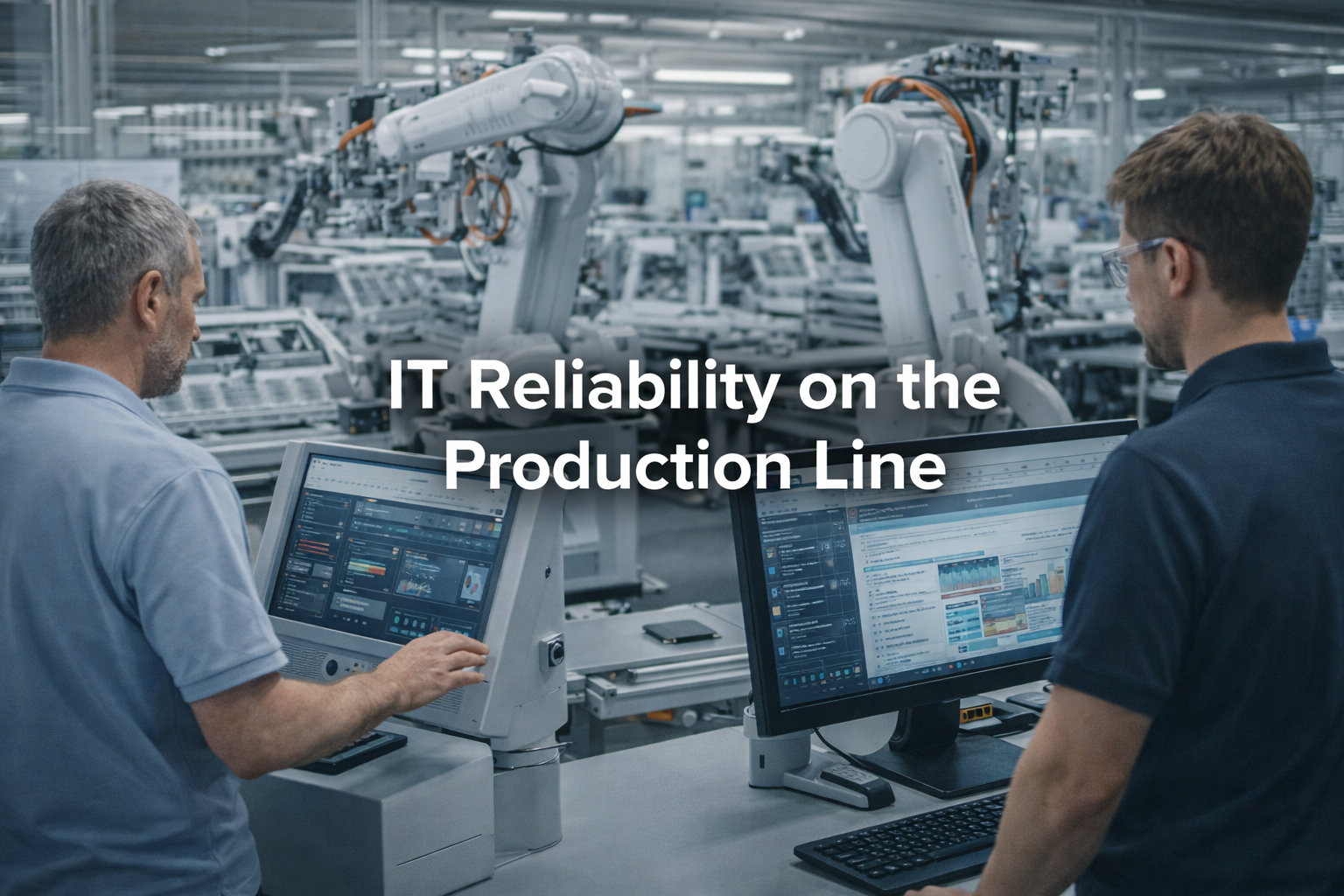
Today, manufacturing depends on networks, software, connected equipment, data systems, and remote access. IT is no longer behind the scenes — it is embedded directly into production, logistics, safety, and compliance.
And yet, many industrial organizations are still managing technology as if it’s an afterthought.
Manufacturing Runs on Technology — Even If It Doesn’t Look Like It
Modern manufacturing floors are filled with technology, even when it’s not obvious.
Production scheduling systems coordinate workflows. Inventory systems track raw materials and finished goods. PLCs and industrial controllers rely on network connectivity. ERP platforms sync operations, purchasing, accounting, and shipping. Remote access enables vendors and engineers to troubleshoot equipment.
When everything works, the technology fades into the background. When it doesn’t, the impact is immediate and unforgiving.
Great Lakes Computer explores this operational reality in Keeping the Wheels Turning: How Manufacturers Can Eliminate Downtime With Better IT Management, showing how proactive IT management directly protects production continuity.
Downtime in Manufacturing Is Exponential, Not Linear
In office environments, downtime slows work. In manufacturing, downtime compounds.
A single system failure can:
- Halt production lines
- Delay downstream processes
- Idle labor
- Miss shipping deadlines
- Trigger contractual penalties
The longer downtime lasts, the harder it is to recover. Restarting production isn’t as simple as flipping a switch. It requires coordination, recalibration, and often manual intervention.
This is why response speed matters so much. Accelerating Business Success: The Importance of a Prompt IT Managed Service Provider Response highlights how fast, informed response minimizes not just downtime — but cascading operational damage.
Cybersecurity Is Now a Manufacturing Risk
Manufacturing used to believe it was insulated from cyber threats. That belief has become dangerous.
Attackers now specifically target industrial organizations because they know production downtime creates leverage. Ransomware attacks against manufacturers are among the fastest-growing categories of cybercrime.
Great Lakes Computer explains this evolving threat in Why Business Cybersecurity Is a Huge Problem and Why SMBs Can’t Afford to Treat Cybersecurity as an Afterthought.
When attackers gain access, they don’t just target office systems. They move laterally into production networks, controllers, and operational technology — environments that were never designed with modern security in mind.
Ransomware on the Factory Floor Is a Different Kind of Crisis
In The Ransomware Tide Is Rising, Great Lakes Computer outlines why ransomware is especially destructive in manufacturing.
Encrypted production systems mean:
- Inoperable machinery
- Lost production data
- Unavailable recipes or configurations
- Safety risks during restart
Unlike office data, production systems often require precise restoration. A rushed or incomplete recovery can cause equipment damage or safety incidents.
Backup and Recovery Protect More Than Data
Backup in manufacturing isn’t just about files. It’s about preserving the operational knowledge that keeps lines running.
Configuration files.
Production schedules.
Machine parameters.
Quality records.
Great Lakes Computer stresses this in Nothing Is More Important Than Data Backup and Disaster Protection: Why Your Business Needs BCDR Now.
Backups must be tested, documented, and aligned with operational recovery needs. A backup that restores data but not production capability is incomplete.
Legacy Systems Create Modern Risk
Manufacturing environments are filled with legacy systems that still work — but were never designed to be connected.
Older operating systems, unsupported software, and proprietary controllers often remain in place because replacing them is expensive or disruptive. Unfortunately, these systems also create some of the largest security and stability risks.
Great Lakes Computer addresses vulnerability management in 4 Key IT Vulnerabilities and How to Prevent Them and Vulnerability Tops List of Cyber Security Scares.
In industrial environments, segmentation, monitoring, and controlled access are critical to protecting legacy equipment without shutting down operations.
Email Is Still the Weakest Link — Even in Manufacturing
It may seem counterintuitive, but many manufacturing breaches still start in the office.
Phishing emails sent to accounting, purchasing, or HR often provide the initial access attackers need. From there, they move deeper into connected systems.
Great Lakes Computer has covered this risk extensively in Phishing Emails: Would You Take the Bait? and Cybersecurity for Credential Phishing.
Manufacturing organizations often underestimate how office systems connect to production environments — until it’s too late.
Compliance and Safety Depend on Reliable IT
Manufacturers operate under strict regulatory and safety requirements. Quality systems, traceability, and reporting all depend on reliable technology.
When systems fail:
- Records may be incomplete
- Audits become difficult
- Compliance risk increases
- Customer trust erodes
Great Lakes Computer explores structured approaches to security and compliance in Why the NIST Cybersecurity Framework Matters for Your Business.
Framework-driven IT management helps manufacturers demonstrate control, consistency, and accountability — all of which regulators and customers expect.
Hardware and Industrial Print Still Matter
Manufacturing relies heavily on physical devices: workstations, terminals, scanners, printers, and label systems.
Failures in these systems disrupt workflows immediately. Labels can’t print. Parts can’t be tracked. Shipments stall.
Great Lakes Computer supports these environments through IT Hardware Maintenance and Repair and industry partnerships like Great Lakes Computer Forms Bixolon Partnership for Best-in-Class Printing Solutions.
Stabilizing hardware removes daily friction and reduces unplanned downtime.
Cloud and Manufacturing: Powerful but Misunderstood
Cloud platforms now play a significant role in manufacturing — from ERP systems to analytics and remote monitoring.
However, cloud does not eliminate risk.
Great Lakes Computer addresses this balance in Cloud Computing in 2021 and How to Protect From Threats While Using Microsoft Office 365.
Access control, device security, and backup remain essential. Misconfigured cloud systems can expose sensitive operational and intellectual property data.
Internal IT Teams Are Often Stretched Thin
Many manufacturers rely on small internal IT teams responsible for everything from production systems to office support.
This creates risk.
When IT teams are overburdened, proactive maintenance gets postponed. Documentation lags. Security alerts get missed. Strategic improvements stall.
Great Lakes Computer explains why external support matters in 3 Reasons SMBs Need Managed Service Providers.
Hybrid models allow internal teams to focus on manufacturing-specific needs while managed services handle monitoring, security, and support.
People Are Still Part of the Risk — and the Solution
Manufacturing employees interact with technology every day, even if it’s not their primary role.
Training matters.
Great Lakes Computer emphasizes this human element in Build a Human Firewall for Your Business.
Basic awareness training reduces incidents, improves reporting, and supports safer operations across the organization.
A Practical IT Strategy for Manufacturing and Industrial Businesses
Manufacturing doesn’t need flashy technology. It needs reliability.
That means:
- Proactive monitoring of critical systems
- Segmentation between office and production networks
- Tested backup and recovery plans
- Secured remote access for vendors
- Standardized hardware and configurations
- Clear incident response procedures
When these elements are in place, IT becomes an enabler instead of a risk.
Ideas and Recommendations for Manufacturing Leaders
If you’re responsible for production, operations, or growth, start here:
- Assess IT risk through the lens of downtime and safety
- Identify single points of failure in production systems
- Secure legacy equipment without disrupting operations
- Verify backup and recovery for production data
- Centralize monitoring and response
- Train employees on basic security awareness
- Partner with IT providers who understand manufacturing environments
These steps don’t slow production — they protect it.
Final Thought
In manufacturing and industrial businesses, technology failure doesn’t just interrupt work. It stops the line.
The organizations that succeed treat IT as part of operations — not a background function. They invest in reliability, security, and support because they understand the cost of silence on the floor.
Great Lakes Computer helps manufacturing and industrial businesses build IT environments that keep production moving, data protected, and downtime under control.
Because when the line stops, the cost is immediate — and the right IT strategy makes sure it doesn’t.