It usually starts with good intentions.
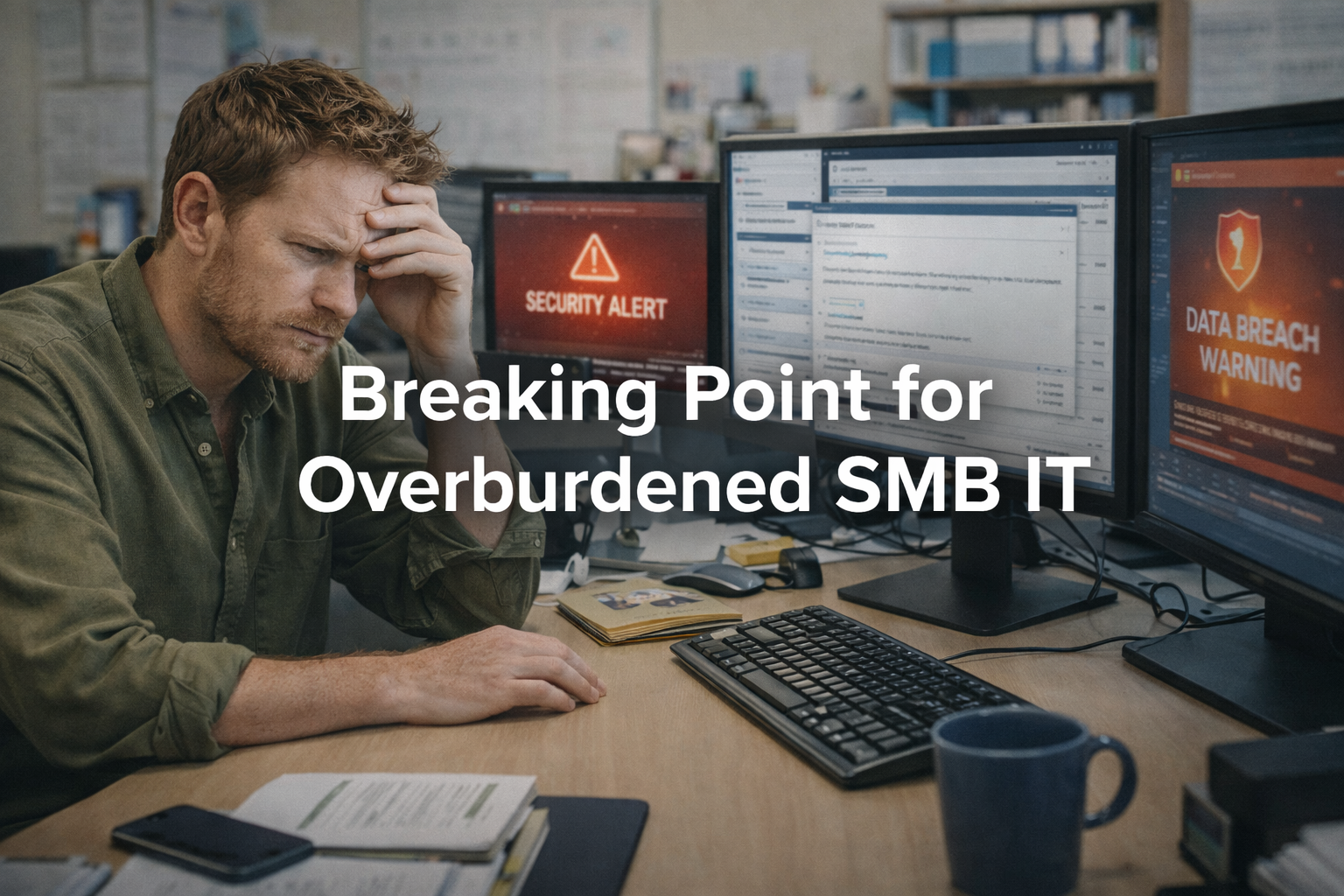
Someone in the company “knows computers,” so they become the go-to person. A system breaks, they fix it. A printer jams, they clear it. An employee can’t log in; they help. Over time, that person becomes the unofficial IT department — often without the title, training, or time to do the job properly.
At first, it feels manageable. But as the business grows, technology touches everything. Email, file storage, security, cloud apps, printers, remote access, backups, compliance — none of it slows down, and none of it waits.
Eventually, IT stops being a side task and starts being a constant interruption.
For many SMBs, this is the moment where growth quietly stalls — not because of lack of demand or poor leadership, but because the business is running on an exhausted, reactive technology model.
The Reality of IT-Overburdened SMBs
Most small and mid-sized businesses don’t choose to underinvest in IT. They drift into it.
Technology decisions get made one problem at a time. Systems are added as needed. Vendors pile up. Documentation never quite happens. Security is “good enough.” Backups are assumed to work.
Meanwhile, the people responsible for IT are already overwhelmed.
Owners are juggling customers, staff, finances, and strategy. Office managers are buried in daily operations. Internal IT staff are drowning in tickets and interruptions. No one has time to step back and fix the underlying problems — so the cycle continues.
Great Lakes Computer sees this pattern constantly, and it’s why they emphasize proactive support in Why the Demand for Outsourced IT Services Is Exploding. As businesses grow, informal IT management stops scaling.
When “Just Fix It” Becomes the Business Model
Reactive IT feels efficient — until it isn’t.
A computer crashes, it gets replaced.
A server runs slow, it gets rebooted.
A security alert appears, it gets ignored.
Each fix solves the immediate issue, but none address the root cause. Over time, problems return faster and hit harder.
Great Lakes Computer breaks down this trap in Why Your Business Needs a Managed Services Provider, explaining why break-fix IT almost always costs more in the long run.
For IT-overburdened SMBs, the biggest cost isn’t money — it’s distraction. Leadership spends time reacting instead of planning. IT staff spend time firefighting instead of improving systems. Employees wait, stall, and work around problems.
Burnout Is an IT Problem, Too
When IT is under constant strain, people feel it.
Internal IT staff burn out because they’re expected to do everything: support, security, strategy, vendor management, documentation, and compliance — often without backup or coverage. Office managers feel overwhelmed because technology issues interrupt their actual job all day long. Owners feel frustrated because problems keep resurfacing without clear answers.
This human cost rarely shows up on balance sheets, but it shows up everywhere else: morale, turnover, missed opportunities, and stalled initiatives.
Great Lakes Computer addresses this operational strain in 3 Reasons SMBs Need Managed Service Providers, highlighting how external support relieves pressure without replacing internal staff.
Security Suffers When Everyone Is Too Busy
Cybersecurity failures rarely come from negligence. They come from overload.
When IT teams are stretched thin, security tasks slip:
- Updates get postponed
- Alerts get ignored
- Access reviews don’t happen
- Backups aren’t tested
- Training gets skipped
Great Lakes Computer explains why this is so dangerous in Why SMBs Can’t Afford to Treat Cybersecurity as an Afterthought.
Cybercriminals target SMBs precisely because they know defenses are inconsistent and monitoring is limited. One missed alert or one untrained employee can open the door to a major incident.
Email and Credential Attacks Hit Overworked Teams Hardest
Phishing and credential theft remain the most common attack methods, and they thrive in busy environments.
When employees are rushing, distracted, or overwhelmed, they’re more likely to click without thinking. A fake invoice, a password reset, or a vendor request slips through — and suddenly credentials are compromised.
Great Lakes Computer has documented this risk extensively in Phishing Emails: Would You Take the Bait?, Cybersecurity for Credential Phishing, and Your Essential Guide to Phishing Email Scams.
Overburdened teams don’t need more warnings. They need systems and training that reduce reliance on perfect human behavior.
Ransomware Thrives on Chaos
Ransomware attacks exploit environments where visibility is low and response is slow.
In The Ransomware Tide Is Rising, Great Lakes Computer explains how attackers take advantage of organizations that don’t have centralized monitoring, tested backups, or clear incident response plans.
For IT-overburdened SMBs, ransomware often reveals problems that have been building quietly for years:
- Unknown vulnerabilities
- Incomplete backups
- Outdated systems
- No documented recovery plan
At that point, the question isn’t how to prevent damage — it’s how to survive it.
Backup and Recovery Get Neglected Until It’s Too Late
Backup is one of the most commonly assumed — and least tested — systems in overburdened environments.
Backups run silently in the background, so it’s easy to believe they’re working. Until they’re needed.
Great Lakes Computer emphasizes this risk in Nothing Is More Important Than Data Backup and Disaster Protection: Why Your Business Needs BCDR Now.
For SMBs already stretched thin, discovering that backups are incomplete or unusable during a crisis is devastating. Recovery takes longer, stress spikes, and leadership is forced into high-stakes decisions under pressure.
Downtime Feels Personal in SMBs
In large enterprises, downtime is absorbed. In SMBs, it’s felt immediately.
Phones stop ringing.
Orders stop processing.
Employees wait.
Customers leave.
Great Lakes Computer explores the importance of speed in Accelerating Business Success: The Importance of a Prompt IT Managed Service Provider Response.
For IT-overburdened SMBs, downtime often lasts longer than it should because there’s no one monitoring systems proactively. Problems are discovered only after they disrupt operations.
Compliance and Insurance Pressure Add Another Layer
As SMBs grow, compliance requirements and cyber insurance expectations increase.
Applications now ask detailed questions about security controls, monitoring, backups, and incident response. Answering “yes” without evidence creates serious risk.
Great Lakes Computer explains this changing landscape in Cyber Insurance Is Becoming Harder to Obtain and Why Honesty Is the Best Policy: Tips for Completing Cyber Insurance Forms.
Overburdened IT teams often lack the time to document controls properly — even when good practices exist. That gap can lead to denied claims or increased liability.
Hardware and Print Still Drain Time and Energy
While cybersecurity grabs headlines, day-to-day IT overload often comes from hardware and print issues.
Printers jam.
Scanners fail.
Workstations slow down.
Parts wear out.
Great Lakes Computer supports SMBs through IT Hardware Maintenance and Repair and Reduce Costs With Managed Print Services, helping remove constant interruptions that drain productivity.
Stabilizing these basics frees up time for more strategic work.
Cloud Tools Help — Until They’re Mismanaged
Cloud platforms have given SMBs incredible flexibility, but they also add complexity.
User permissions, device access, data sharing, and backups all require ongoing attention.
Great Lakes Computer addresses this balance in Cloud Computing in 2021 and How to Protect From Threats While Using Microsoft Office 365.
Without clear ownership, cloud environments become another source of overload instead of relief.
Why Managed IT Is a Relief Valve, Not a Replacement
Managed IT is often misunderstood as “outsourcing everything.” In reality, it’s about support, coverage, and structure.
Great Lakes Computer explains this clearly in What Are Managed IT Services?.
For IT-overburdened SMBs, managed services:
- Reduce ticket volume
- Add 24/7 monitoring
- Improve security visibility
- Provide documentation and reporting
- Support internal staff instead of replacing them
The goal is not less control — it’s less chaos.
Employees Are Part of the Solution
When IT teams are overloaded, employees often feel helpless. But with basic training, they become a powerful line of defense.
Great Lakes Computer emphasizes this in Build a Human Firewall for Your Business.
Clear guidance on email security, password hygiene, and incident reporting reduces risk and lightens the load on IT teams.
A Sustainable IT Model for SMBs
Overburdened SMBs don’t need more tools. They need a better model.
That model includes:
- Proactive monitoring instead of constant reaction
- Shared responsibility instead of single points of failure
- Documented systems instead of tribal knowledge
- Tested recovery instead of assumptions
When IT stops being a daily emergency, the entire business operates more smoothly.
Ideas and Recommendations for IT-Overburdened SMBs
If your organization feels stretched thin, these steps create immediate relief:
- Conduct an honest assessment of IT workload and risk
- Identify tasks that consume time but add little strategic value
- Implement proactive monitoring and alerting
- Verify and test backup and recovery plans
- Strengthen email and endpoint security
- Train employees to reduce preventable incidents
- Partner with managed IT providers to share the load
These steps don’t add bureaucracy. They remove friction.
Final Thought
IT-overburdened SMBs don’t fail because they lack effort. They fail because they try to do too much with too little support.
When technology becomes predictable, secure, and well-supported, people regain time, focus, and confidence.
Great Lakes Computer helps SMBs move from constant firefighting to sustainable operations — not by taking control away, but by making sure no one has to carry the entire load alone.
Because IT shouldn’t be the thing holding your business together — or wearing your people down.